
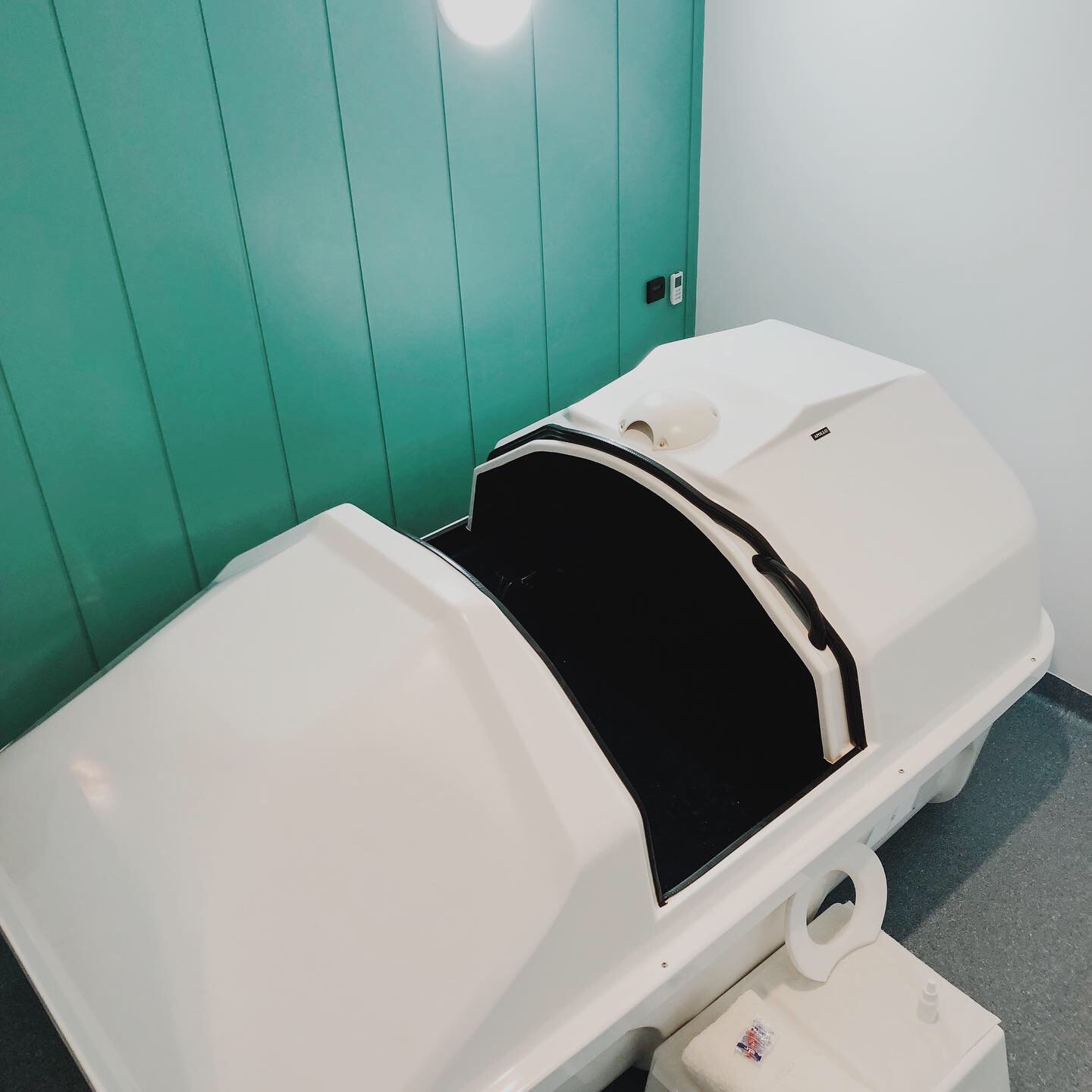
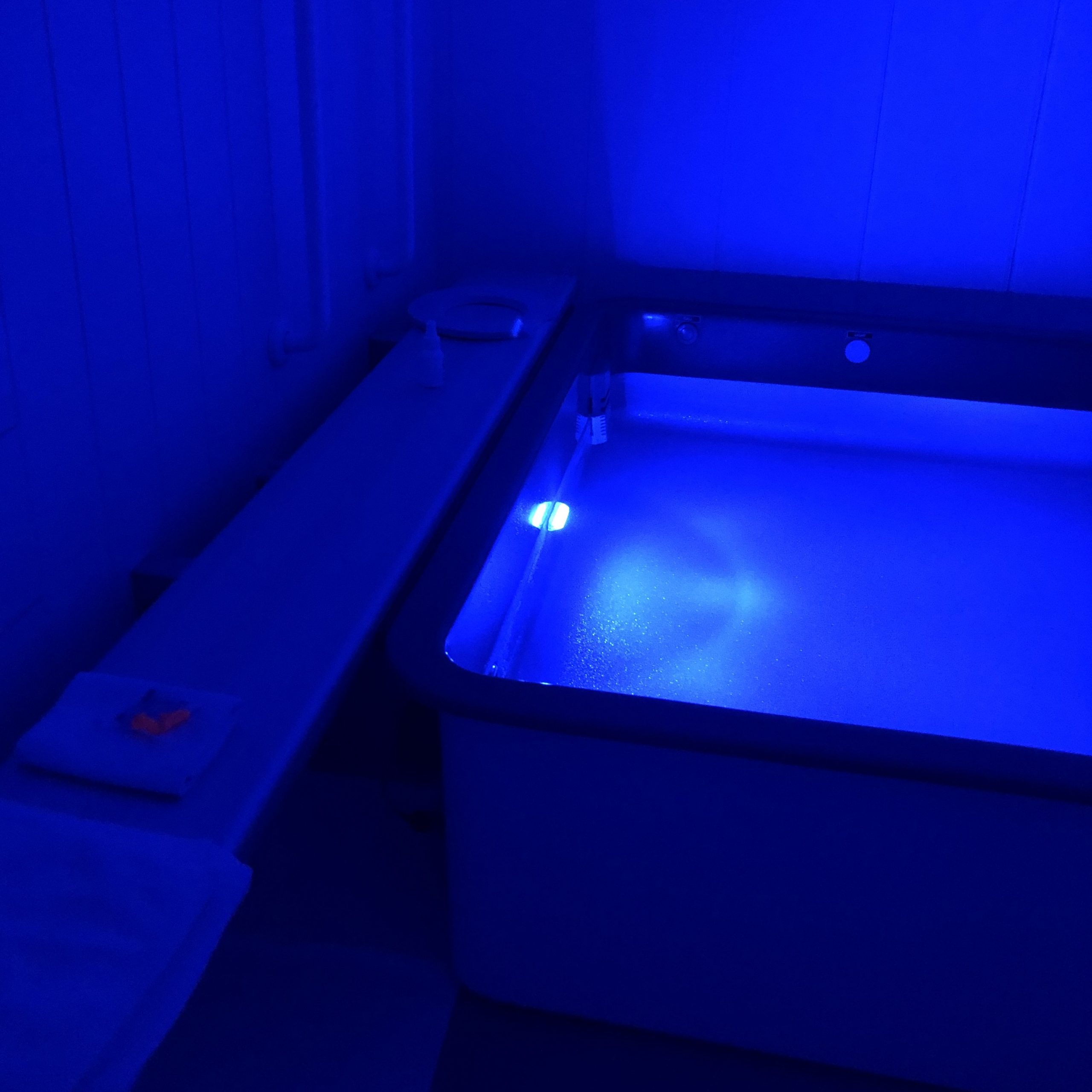
Floating has been around since 1954 and was first developed by neurophysiologist Professor Dr John C. Lilly at the National Institute of Mental Health in Bethesda, Maryland. The effects of floating have been scientifically validated around the world. It has been researched for mental health, physical health, resistance to addictive habits, accelerated learning and elite sports performance at Harvard, Stanford, Yale and other universities, along with hospitals and sporting facilities around the world. It is used by famous athletes as an essential part of their training – for instance, The Australian Institute of Sport has been promoting floatation as a recovery therapy since 1983.
Scientists estimate that up to 90% of the brain’s normal workload is caused by the effects of routine environmental stimulation the combined effects of gravity, temperature, touch, light and sound on the muscles, nervous system and sense organs of the body.
The float tank screens out these external physical stimuli, creating a pure state of ‘sensory’ relaxation. Under these conditions, your body has a chance to restore its natural powers of self-regulation, while you simply lie back and rediscover the latent abilities of a deeply relaxed mind.
Whilst floating, your ears are below the surface of the solution, cutting out external sounds. Many people, however, find that gentle ambient music accelerates and intensifies the relaxation process. The Apollo float tanks powerful underwater speaker system creates the feeling that you are floating in a sea of music, enhancing the rich dream-like quality of the experience.
The temperature inside the capsule is kept at a constant 34.5 degrees Celsius – relaxed skin temperature. As a result, the nerve endings which cover the surface of the skin no longer perceive any sense of separation between the skin and the silky mineral solution which surrounds it.
In the dark, weightless tranquillity of the Apollo float tank, the boundaries of your body seem to dissolve and vanish. As you enter progressively deeper levels of relaxation, even your body seems to ‘disappear’ from conscious awareness because of the sharp reduction in signals being transmitted through the nervous system to the brain.
Free from external stimulation, your body can achieve a state of relaxation which is deeper, purer and more beneficial than sleep. With no body to look after, your mind can attend to other business.
With no body to look after, your mind can attend to other business.
The sudden de-stimulation of large areas of the nervous system triggers a spontaneous chain reaction throughout the body known as the parasympathetic response. Muscle tension, blood pressure, heart rate and oxygen consumption all drop dramatically. The whole chemistry of the body changes.
Blood vessels including capillaries dilate, improving cardio-vascular efficiency and increasing the supply of oxygen and nutrients to every single cell in your body. This is called the vasodilatory effect.
Stress related chemicals such as adrenaline, cortisol, Adrenocorticotropic hormone (ACTH) and lactate are removed from the bloodstream and replaced by beneficial endorphins. High levels of cortisol and ACTH are known to weaken the body’s immune system and create feelings of depression, while lower baseline levels are associated with feelings of dominance and confidence.
The endorphin discovered by NIMH researchers in 1976, is the essence of pleasure. The body’s endorphin level is what makes some people naturally happy and others less so. Sometimes called ‘the body’s natural opiate’, the endorphins released while floating create intense feelings of well-being, alleviating fatigue and pain, as well as improving many higher brain functions. Happiness is not an illusion – it’s an endorphin.
These biochemical changes occur naturally and spontaneously as by-products of deep, sensory relaxation. No training or techniques are required. Just lie back and let it happen.
Although your body enters a level of physical relaxation deeper than sleep in the tank, your mind remains awake and dreamily alert, just above the threshold of sleep. Areas of the brain are suddenly liberated from their normal workload of processing signals from the nervous system and organs. There is a sharp drop in the level of electrical activity of the brain (measured on an EEG) from the usual 20-25 Hz down to 4-8 Hz. EEG readings show a slow, rhythmic wave pattern known as the ‘theta state’.
This is a twilight zone of creative, inspirational thought processes in which your abilities are at their highest and powers of visualisation and auto-suggestion are enhanced. Measurements of brain waves produced by experienced zen meditators in deep satori show large amounts of theta activity across the cortex. For most people, however, the theta state is almost impossible to enter without falling asleep.
Whilst in the tank, you will enter this elusive state effortlessly and enjoyably and will remain in it for most of the session.
EEG measurements on floaters show that the level of activity in the two hemispheres of the brain also becomes more balanced and synchronised. This can produce a shift in awareness away from the normally dominant ‘left-brain’ thought patterns (logical, linear, analytical, and detailed) towards intuitive, synthetic and large-scale thought modes of the ‘right-brain’. The tank does not inhibit the left hemisphere, but simply changes its role from one of dominance to one of partnership with the other hemisphere, enabling floaters to use all mental powers.
Women that are in their 2nd and 3rd trimesters of pregnancy are able to float after seeking advice from their healthcare provider.
Being pregnant is a wonderful time in any woman’s life. The changes to your body as you prepare to bring a baby into the world are endless but one of the largest changes is obviously the amount of extra kilos you end up carrying around with you every day. In a typical pregnancy the woman may gain between 10 and 20 kilos. Which is very healthy for your baby and for you, but for your back, hips, knees and feet this can be a challenge. Gravity is relentless and in the final stages of your pregnancy there is no position, sitting, standing, laying down, or otherwise that can relieve this pressure. Until they invented the floatation tank. The zero-gravity environment created by floating on epsom salt saturated water is unique and an unbelievable relief.
Pregnant Floating better than normal floating
Floating while pregnant is indeed better than floating when you are not pregnant for one massive reason. You need it more than everybody else. Absolutely you will get the benefits that everyone else receives when they float, the dopamine and endorphin release, the mental clarity and calmness, the ability to meditate without the distractions of the senses, but you will also benefit from a unique oneness with your baby (some women can even hear their babies heartbeat), relief from the additional kilos that you are carrying around, and the ability to be comfortable while laying down.
What should you tell your healthcare provider about floating